How Much Does It Cost to Start a Personal Training Business in New Jersey?
Starting a Personal Training Business in New Jersey typically costs between $6,250 and $125,000, with a median estimate of $31,250. New Jersey’s cost of living runs 15% above the national average, which increases commercial rent and labor costs. LLC formation in New Jersey costs $125 to file. Most personal training business businesses take 1-3 months to launch.
Last updated: May 2026
How Much Does It Cost to Start a Personal Training Business in New Jersey?
Low
$6,250
Medium
$31,250
High
$125,000
National average: $5,000 – $100,000
Interactive Startup Cost Calculator
Startup Cost Calculator
Personal Training Business in New Jersey
Options
Startup Costs
$31,970
Monthly Costs
$5,000
First Year Total
$91,970
Full Cost Breakdown
| Cost Category | Low | Medium | High | Notes |
|---|---|---|---|---|
| Certifications & Continuing Education | $625 | $2,500 | $6,250 | NASM (https://www.nasm.org/) and ACE (https://www.acefitness.org/) are the dominant entry-level certifications and the NSCA CSCS is the standard for strength-and-conditioning work. Plan for the certification exam plus study materials, and budget for specialty certifications (prenatal, corrective exercise, nutrition) on top. Annual CEUs are required to maintain certification. |
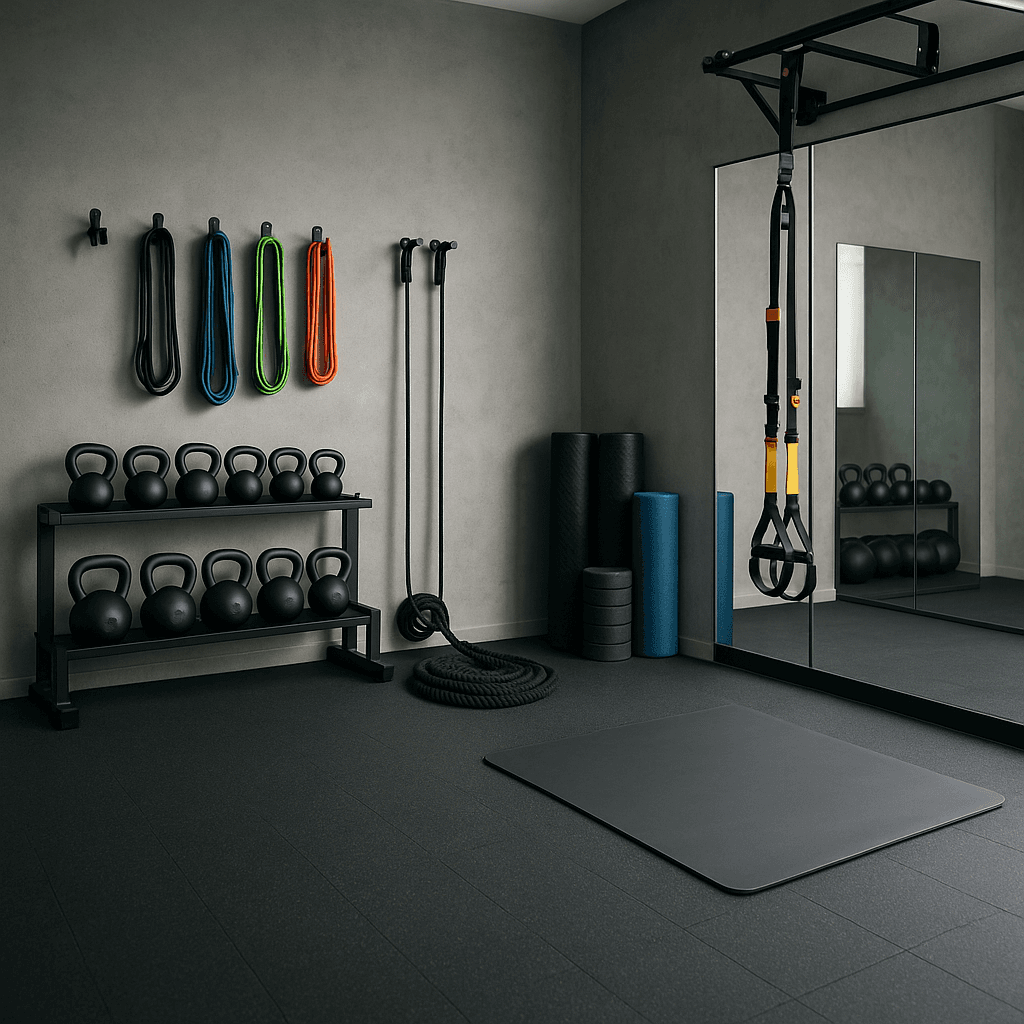
| Training Equipment | $1,250 | $6,250 | $37,500 | A mobile trainer can equip themselves for a low four-figure budget in portable equipment. A private studio setup runs into the tens of thousands once racks, cardio, and flooring are factored in. Starting with bodyweight, bands, and a few kettlebells minimizes startup costs. |
| Insurance | $240 | $720 | $2,400 | NASM and ACE certification holders can typically get professional liability insurance bundled through their certification body for a low three-figure annual cost. Independent trainers should carry meaningful liability limits — one-million-per-occurrence with a two-million aggregate is the standard floor for client-facing fitness work. |
| Business Software & Apps | $250 | $1,250 | $3,750 | TrueCoach, TrainHeroic, or My PT Hub are common workout-delivery platforms billed on monthly subscriptions. Square or Stripe handle payment processing. A basic website with online booking is a one-time low-four-figure cost. |
| Marketing & Social Media | $625 | $2,500 | $10,000 | Personal trainers are their own brand — professional photos and before/after transformations are the primary marketing tool. Instagram growth and consistent content creation is more effective than paid ads for most trainers. |
| Working Capital Reserve | $2,500 | $10,000 | $31,250 | Most personal trainers reach part-time profitability within 3 months and full-time income within 6-12 months. Client cancellations and seasonal slowdowns make 2-3 months of reserves prudent. |
| Private Studio Lease (if applicable) (optional) | $250 | $6,250 | $25,000 | Many trainers operate from gyms (paying monthly rent to the gym or working as an employee), client homes, or outdoor spaces — avoiding lease costs entirely. A small private studio of 500-800 sq ft typically commands a low four-figure monthly rent depending on market. |
| Gym Membership or Rental Fees (monthly) | $625 | $2,500 | $10,000 | Training at a commercial gym typically requires either a partnership agreement priced as a monthly fee or per-session day-pass pricing. Some gyms offer trainers a free membership in exchange for bringing paying clients. |
| Total Startup Cost | $5,490 | $23,220 | $91,150 | Required costs only |
Licenses & Permits in New Jersey
Licenses & Permits in New Jersey
General Business License
New Jersey requires businesses to register with the New Jersey Division of Revenue and Enterprise Services through the Business Registration Certificate process. Businesses must also register for sales tax collection with the Division of Taxation. New Jersey's 565 municipalities have their own business license requirements. New Jersey requires a Certificate of Authority to collect sales tax, and businesses with employees must register with the Division of Revenue for payroll taxes.
Industry-Specific Licenses
- Retail Food Establishment License — New Jersey Department of Health or Local Health DepartmentCost: Varies — contact agency • Renewal: Annual
- Home Improvement Contractor Registration — New Jersey Division of Consumer AffairsCost: Varies — contact agency • Renewal: Biennial
- Cosmetology Shop License — New Jersey Board of Cosmetology and HairstylingCost: Varies — contact agency • Renewal: Biennial
- Real Estate Broker License — New Jersey Real Estate CommissionCost: Varies — contact agency • Renewal: Biennial
- Child Care Center License — New Jersey Division of Children and Families — Office of LicensingCost: Varies — contact agency • Renewal: Annual
- Plenary Retail Consumption License — New Jersey Division of Alcoholic Beverage ControlCost: Varies — contact agency • Renewal: Annual
- Motor Carrier Operating Authority — New Jersey Division of Taxation — Motor CarrierCost: Varies — contact agency • Renewal: Annual
- Electrical Contractor License — New Jersey Division of Consumer Affairs — State Board of Examiners of Electrical ContractorsCost: Varies — contact agency • Renewal: Biennial
Home-Based Business Rules
New Jersey municipalities regulate home-based businesses through local zoning ordinances under the MLUL. Most New Jersey municipalities allow home occupations in residential zones with restrictions on customer traffic, signage, and commercial activity visible from the street. New Jersey's dense suburban character means home-based business regulations are actively enforced. New Jersey's cottage food law permits limited home-based food production and direct consumer sales.
Monthly Operating Costs
After launch, plan for these ongoing monthly expenses for your Personal Training Business:
Low
$1,000/mo
Medium
$4,000/mo
High
$15,000/mo
Revenue Potential
Annual Revenue Range
$2,000 – $30,000 (monthly)
Profit Margins
40%-70% net profit typical for established solo trainers
Break-Even Timeline
1-6 months
How New Jersey Compares to Neighboring States
New Jersey is a higher-cost state for starting a Personal Training Business, with a cost-of-living index of 115.3 (national average is 100). Compared to neighboring New York ($34,750 median startup cost), New Jersey offers lower costs for a Personal Training Business.
| State | Est. Cost | LLC Fee |
|---|---|---|
| New Jersey (current) | $31,250 | $125 |
| New York | $34,750 | $200 |
| Pennsylvania | $24,000 | $125 |
| Delaware | $26,000 | $110 |
Common Mistakes to Avoid
- 1
Trying to train everyone instead of specializing — trainers who specialize (weight loss, athletes, seniors, prenatal) fill their roster faster and command higher rates
- 2
Underpricing sessions — rates that don't cover certifications, insurance, marketing, and reasonable hourly compensation are unsustainable; benchmark against established trainers in your market and price for the actual cost of doing business
- 3
Not creating recurring revenue — switch clients from pay-per-session to monthly packages for predictable cash flow
- 4
Neglecting continuing education — skills and certifications directly justify rate increases
- 5
Not taking before photos and tracking metrics — client results are your primary marketing asset
- 6
Working at a gym as an employee instead of as an independent contractor — employee arrangements typically transfer a substantial share of session revenue to the gym in exchange for client flow and facilities
Next Steps to Launch Your Personal Training Business
- 1
Register your Personal Training Studio as an LLC with the New Jersey Secretary of State ($125 filing fee)
- 2
Obtain a New Jersey business license and ensure all trainers hold nationally recognized certifications (NASM, ACE, NSCA)
- 3
Get professional liability (errors and omissions) insurance and general liability coverage for personal training; premiums vary by certification body and coverage limits
- 4
Draft client intake forms, PAR-Q health questionnaires, and liability waivers reviewed by a New Jersey attorney
- 5
Purchase training equipment: adjustable dumbbells, cables, TRX systems, kettlebells, and assessment tools sized to your studio model and client volume
- 6
Set up scheduling, billing, and client progress tracking software (TrainerRoad, My PT Hub, or similar)
- 7
Verify New Jersey requirements if operating from a home gym — some municipalities require a home occupation permit
- 8
Build your client testimonial base during the first 90 days using a discounted foundational client program
Frequently Asked Questions
Related Businesses in New Jersey
Gym & Fitness Center
Health & Wellness$50,000 – $1,000,000
View in New Jersey →
Yoga Studio
Health & Wellness$15,000 – $200,000
View in New Jersey →
Martial Arts Studio
Childcare & Education$20,000 – $200,000
View in New Jersey →
Juice Bar & Smoothie Shop
Food & Beverage$25,000 – $250,000
View in New Jersey →
Dance Studio
Childcare & Education$20,000 – $250,000
View in New Jersey →
Start a Personal Training Business in Other States
See the national overview for Personal Training Business or browse all businesses you can start in New Jersey.