How Much Does It Cost to Start a Esthetics & Skincare Business in Florida?
Starting a Esthetics & Skincare Business in Florida typically costs between $8,960 and $134,400, with a median estimate of $44,800. Florida’s cost of living runs 3% above the national average, which increases commercial rent and labor costs. LLC formation in Florida costs $125 to file. Most esthetics & skincare business businesses take 1-3 months to launch.
Last updated: May 2026
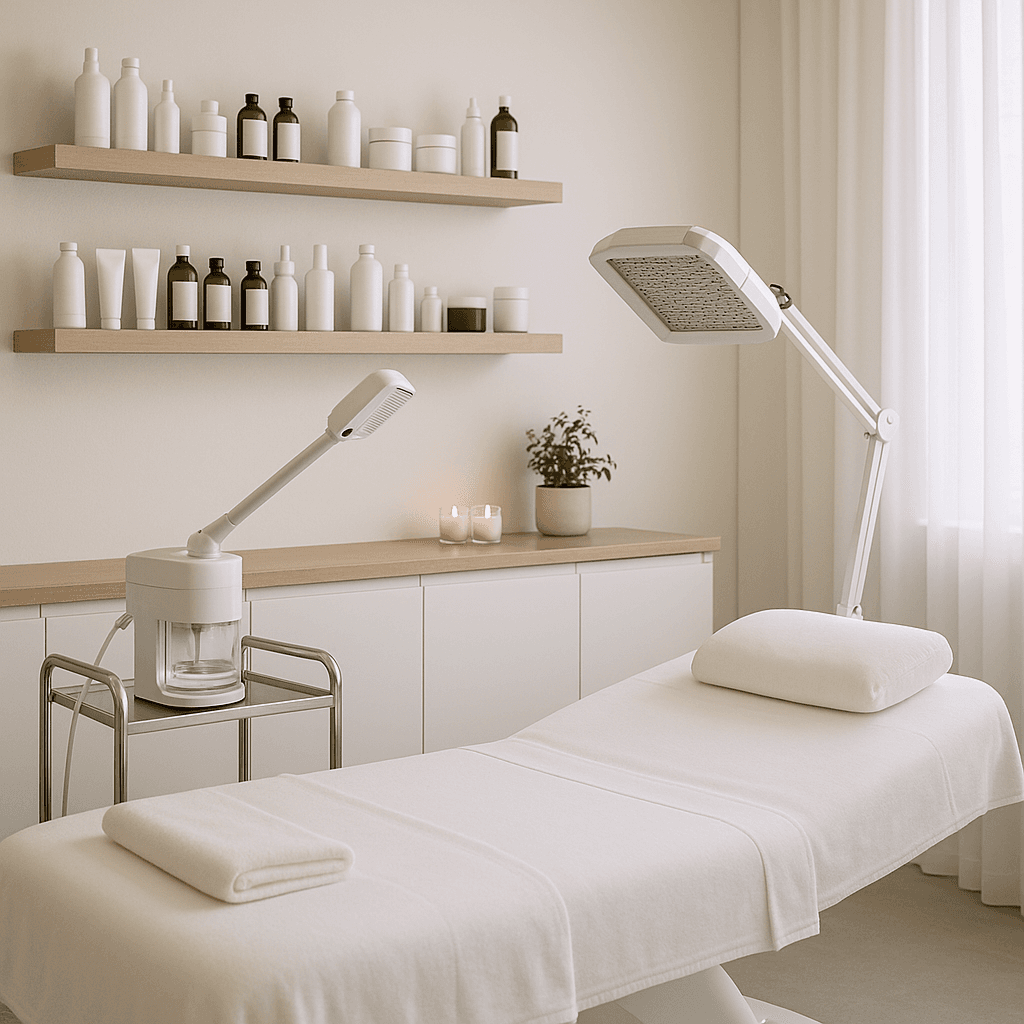
How Much Does It Cost to Start a Esthetics & Skincare Business in Florida?
Low
$8,960
Medium
$44,800
High
$134,400
National average: $8,000 – $120,000
Interactive Startup Cost Calculator
Startup Cost Calculator
Esthetics & Skincare Business in Florida
Options
Startup Costs
$37,296
Monthly Costs
$5,600
First Year Total
$104,496
Full Cost Breakdown
| Cost Category | Low | Medium | High | Notes |
|---|---|---|---|---|
| Treatment Room or Suite | $1,120 | $11,200 | $56,000 | Salon-suite networks like Sola (https://www.solasalonstudios.com/), Phenix, and MY Salon Suite are typically rented on a weekly or monthly basis with furniture, utilities, and reception included — prices vary by metro and suite size. |
| Esthetics Equipment | $2,240 | $8,960 | $28,000 | A quality facial bed is a low-to-mid four-figure capital purchase. Advanced devices like microdermabrasion, LED therapy panels, and ultrasonic skin scrubbers are individual line items at similar price points; equipping a full treatment room adds up quickly. |
| Skincare Products & Supplies | $1,680 | $5,600 | $16,800 | Retail product sales meaningfully expand revenue per client visit. Use professional lines (Dermalogica, SkinCeuticals, PCA Skin) for credibility and licensed-only access to product tiers consumers can't buy direct. |
| State Esthetician License | $224 | $1,120 | $3,360 | Esthetics licenses require 260-1,500 hours of school depending on the state. Individual licenses are a low-to-mid three-figure cost; the much larger investment is the school program itself. |
| Insurance | $336 | $896 | $2,800 | Beauty and skincare professional liability through industry associations like ABMP (https://www.abmp.com/) is typically a low three-figure annual cost — well below comparable medical malpractice policies because the procedure scope is narrower. |
| Booking Software & Marketing | $224 | $2,240 | $8,960 | Vagaro and StyleSeat are common booking platforms billed on monthly subscriptions and handle scheduling, payments, and client reminders in one stack. Instagram remains the top organic marketing channel for esthetics. |
| Sanitation & Safety Equipment | $336 | $1,680 | $4,480 | State health boards require proper sanitation equipment. An autoclave is a low-to-mid four-figure capital item. Single-use disposables (spatulas, gloves, wax strips) are an ongoing monthly operating cost that scales with treatment volume. |
| Working Capital Reserve | $1,680 | $5,600 | $22,400 | Suite renters can typically build to profitability within 3-4 months with consistent marketing. |
| Total Startup Cost | $7,840 | $37,296 | $142,800 | Required costs only |
Licenses & Permits in Florida
Licenses & Permits in Florida
General Business License
Florida requires most businesses to obtain an Annual Resale Certificate and register for sales tax with the Florida Department of Revenue. Many professions require licenses through the Florida Department of Business and Professional Regulation (DBPR). Additionally, Florida counties and cities may require local business tax receipts (formerly called occupational licenses), which carry state-set annual fees that vary depending on business type and location.
Industry-Specific Licenses
- Food Service Establishment License — Florida Department of Business and Professional Regulation — Division of Hotels and RestaurantsCost: Varies — contact agency • Renewal: Annual
- Certified Contractor License — Florida Department of Business and Professional Regulation — ContractorsCost: Varies — contact agency • Renewal: Biennial
- Cosmetology Salon License — Florida Department of Business and Professional Regulation — CosmetologyCost: Varies — contact agency • Renewal: Biennial
- Real Estate Broker License — Florida Real Estate CommissionCost: Varies — contact agency • Renewal: Biennial
- Child Care Facility License — Florida Department of Children and FamiliesCost: Varies — contact agency • Renewal: Annual
- Beverage License — Florida Division of Alcoholic Beverages and TobaccoCost: Varies — contact agency • Renewal: Annual
- Vacation Rental License — Florida Department of Business and Professional RegulationCost: Varies — contact agency • Renewal: Biennial
- Home Health Agency License — Florida Agency for Health Care AdministrationCost: Varies — contact agency • Renewal: Annual
Home-Based Business Rules
Florida municipalities and counties regulate home-based businesses through local zoning ordinances. Florida law (F.S. 559.955) prohibits local governments from banning home-based businesses entirely, but allows reasonable regulations regarding customer visits, signage, and storage. Many Florida counties have updated their home occupation ordinances to allow more types of businesses while limiting impact on neighbors.
Monthly Operating Costs
After launch, plan for these ongoing monthly expenses for your Esthetics & Skincare Business:
Low
$1,500/mo
Medium
$5,000/mo
High
$15,000/mo
Revenue Potential
Annual Revenue Range
$40,000 – $350,000 (annual)
Profit Margins
30-50%
Break-Even Timeline
3-9 months
How Florida Compares to Neighboring States
Florida is close to the national average for Esthetics & Skincare Business startup costs, with a cost-of-living index of 103.1. Compared to neighboring Georgia ($37,600 median startup cost), Florida has higher costs for a Esthetics & Skincare Business.
Common Mistakes to Avoid
- 1
Not specializing — estheticians who focus on one treatment type (acne, anti-aging, lashes) command premium rates
- 2
Undercharging — a 60-minute facial done well, with skin analysis and customization, supports a premium price point above generic spa-chain rates; pricing too low signals low value to clients
- 3
Neglecting retail product sales — home care product recommendations drive compliance and meaningfully expand revenue per client visit
- 4
Working from home without proper permits — some states and HOAs prohibit home-based esthetics businesses
- 5
Not building a rebooking protocol — ask every client to rebook before they leave; empty calendar days are lost income
Next Steps to Launch Your Esthetics & Skincare Business
- 1
Form your LLC in Florida — esthetic businesses perform treatments with liability for skin reactions and injuries (filing fee: $125)
- 2
Obtain your Florida esthetician license from the Florida Board of Cosmetology or Barbering — requires state-approved training program and exam
- 3
Get professional liability insurance to protect against claims of chemical burns, allergic reactions, or adverse treatment outcomes; premiums are typically a low three-figure annual cost through industry associations
- 4
Register your esthetics space with Florida health department — facial rooms and treatment areas require inspection and sanitation certification
- 5
Set up a sanitation protocol compliant with Florida Board of Cosmetology rules — all tools must be disinfected between clients
- 6
Install a booking system (Square Appointments, Vagaro, or Fresha) for online scheduling and automated appointment reminders
- 7
Source professional skincare products (Dermalogica, SkinCeuticals, or PCA Skin) — professional-grade products differentiate from DIY treatments
- 8
Build your client portfolio with before/after photos (with consent) to market on Instagram — visual results drive esthetic bookings
Frequently Asked Questions
Related Businesses in Florida
Spa & Massage Therapy
Health & Wellness$10,000 – $250,000
View in Florida →
Hair Salon
Beauty & Personal Care$15,000 – $250,000
View in Florida →
Nail Salon
Beauty & Personal Care$20,000 – $250,000
View in Florida →
Med Spa
Health & Wellness$100,000 – $1,000,000
View in Florida →
Tattoo Shop
Beauty & Personal Care$20,000 – $200,000
View in Florida →
Start a Esthetics & Skincare Business in Other States
See the national overview for Esthetics & Skincare Business or browse all businesses you can start in Florida.