How Much Does It Cost to Start a Esthetics & Skincare Business in Colorado?
Starting a Esthetics & Skincare Business in Colorado typically costs between $8,800 and $132,000, with a median estimate of $44,000. Colorado’s cost of living runs 3% above the national average, which increases commercial rent and labor costs. LLC formation in Colorado costs $50 to file. Most esthetics & skincare business businesses take 1-3 months to launch.
Last updated: May 2026
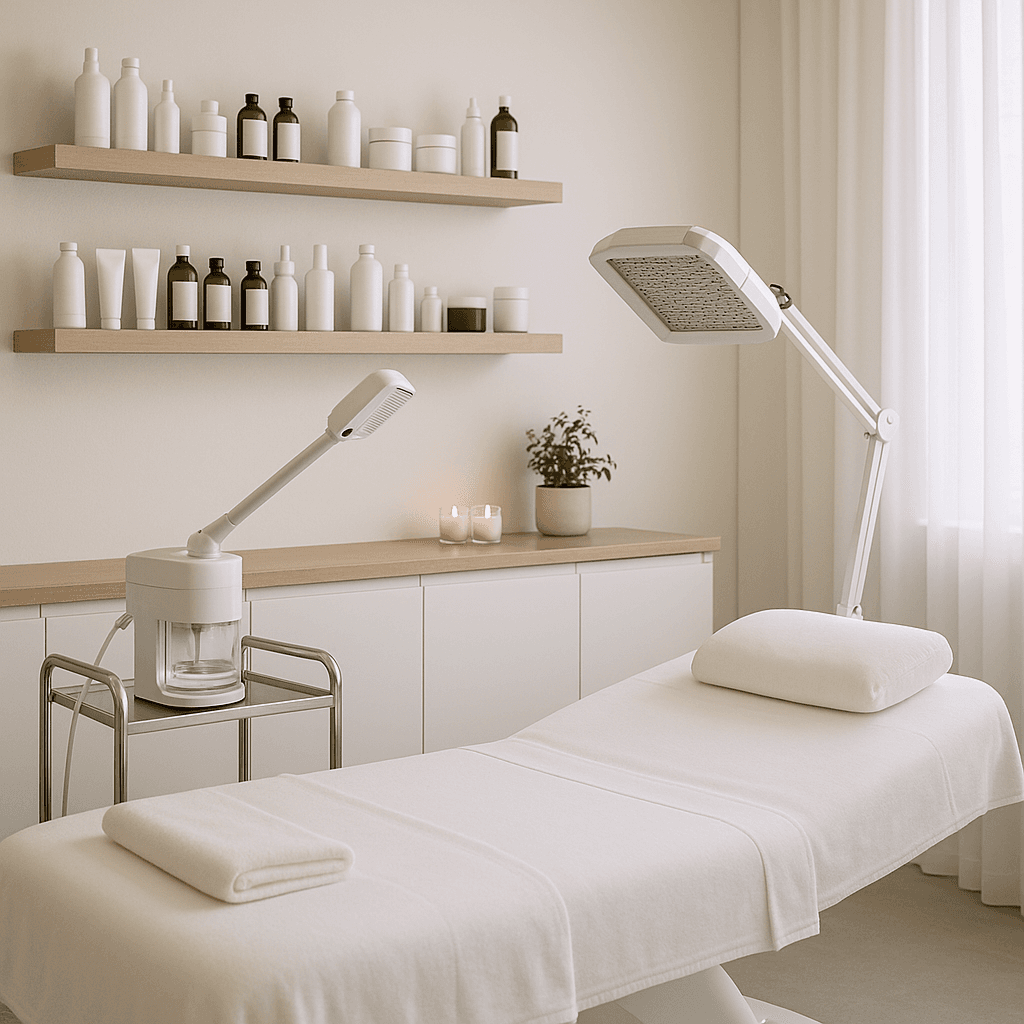
How Much Does It Cost to Start a Esthetics & Skincare Business in Colorado?
Low
$8,800
Medium
$44,000
High
$132,000
National average: $8,000 – $120,000
Interactive Startup Cost Calculator
Startup Cost Calculator
Esthetics & Skincare Business in Colorado
Options
Startup Costs
$36,630
Monthly Costs
$5,500
First Year Total
$102,630
Full Cost Breakdown
| Cost Category | Low | Medium | High | Notes |
|---|---|---|---|---|
| Treatment Room or Suite | $1,100 | $11,000 | $55,000 | Salon-suite networks like Sola (https://www.solasalonstudios.com/), Phenix, and MY Salon Suite are typically rented on a weekly or monthly basis with furniture, utilities, and reception included — prices vary by metro and suite size. |
| Esthetics Equipment | $2,200 | $8,800 | $27,500 | A quality facial bed is a low-to-mid four-figure capital purchase. Advanced devices like microdermabrasion, LED therapy panels, and ultrasonic skin scrubbers are individual line items at similar price points; equipping a full treatment room adds up quickly. |
| Skincare Products & Supplies | $1,650 | $5,500 | $16,500 | Retail product sales meaningfully expand revenue per client visit. Use professional lines (Dermalogica, SkinCeuticals, PCA Skin) for credibility and licensed-only access to product tiers consumers can't buy direct. |
| State Esthetician License | $220 | $1,100 | $3,300 | Esthetics licenses require 260-1,500 hours of school depending on the state. Individual licenses are a low-to-mid three-figure cost; the much larger investment is the school program itself. |
| Insurance | $330 | $880 | $2,750 | Beauty and skincare professional liability through industry associations like ABMP (https://www.abmp.com/) is typically a low three-figure annual cost — well below comparable medical malpractice policies because the procedure scope is narrower. |
| Booking Software & Marketing | $220 | $2,200 | $8,800 | Vagaro and StyleSeat are common booking platforms billed on monthly subscriptions and handle scheduling, payments, and client reminders in one stack. Instagram remains the top organic marketing channel for esthetics. |
| Sanitation & Safety Equipment | $330 | $1,650 | $4,400 | State health boards require proper sanitation equipment. An autoclave is a low-to-mid four-figure capital item. Single-use disposables (spatulas, gloves, wax strips) are an ongoing monthly operating cost that scales with treatment volume. |
| Working Capital Reserve | $1,650 | $5,500 | $22,000 | Suite renters can typically build to profitability within 3-4 months with consistent marketing. |
| Total Startup Cost | $7,700 | $36,630 | $140,250 | Required costs only |
Licenses & Permits in Colorado
Licenses & Permits in Colorado
General Business License
Colorado does not have a statewide general business license requirement. Businesses must register their entity with the Colorado Secretary of State and obtain a sales tax license from the Colorado Department of Revenue if selling taxable goods or services. Many municipalities require a local business license — Denver, Aurora, Colorado Springs, and Boulder all have their own business licensing programs with state-set annual fees that vary by program.
Industry-Specific Licenses
- Retail Food Establishment License — Colorado Department of Public Health and Environment or County HealthCost: Varies — contact agency • Renewal: Annual
- Contractor License — Local jurisdiction (Denver Building and Fire Code Services, etc.)Cost: Varies — contact agency • Renewal: Annual
- Retail Marijuana Store License — Colorado Marijuana Enforcement DivisionCost: Varies — contact agency • Renewal: Annual
- Cosmetology Salon License — Colorado Office of Barber and Cosmetology LicensureCost: Varies — contact agency • Renewal: Biennial
- Real Estate Broker License — Colorado Division of Real EstateCost: Varies — contact agency • Renewal: Every 3 years
- Child Care Center License — Colorado Department of Early ChildhoodCost: Varies — contact agency • Renewal: Annual
- Retail Liquor Store License — Colorado Liquor Enforcement DivisionCost: Varies — contact agency • Renewal: Annual
- Outfitter and Guide License — Colorado Parks and WildlifeCost: Varies — contact agency • Renewal: Annual
Home-Based Business Rules
Colorado municipalities regulate home-based businesses through local zoning ordinances. Denver allows home occupations with restrictions on customer visits (typically 1 person at a time), no exterior display, and no storage of commercial vehicles. Colorado State law preempts local regulations that would completely prohibit home-based businesses. The Colorado Cottage Food Act specifically authorizes home-based food production with certain limitations.
Monthly Operating Costs
After launch, plan for these ongoing monthly expenses for your Esthetics & Skincare Business:
Low
$1,500/mo
Medium
$5,000/mo
High
$15,000/mo
Revenue Potential
Annual Revenue Range
$40,000 – $350,000 (annual)
Profit Margins
30-50%
Break-Even Timeline
3-9 months
How Colorado Compares to Neighboring States
Colorado is close to the national average for Esthetics & Skincare Business startup costs, with a cost-of-living index of 103.1. Compared to neighboring Wyoming ($33,600 median startup cost), Colorado has higher costs for a Esthetics & Skincare Business.
Common Mistakes to Avoid
- 1
Not specializing — estheticians who focus on one treatment type (acne, anti-aging, lashes) command premium rates
- 2
Undercharging — a 60-minute facial done well, with skin analysis and customization, supports a premium price point above generic spa-chain rates; pricing too low signals low value to clients
- 3
Neglecting retail product sales — home care product recommendations drive compliance and meaningfully expand revenue per client visit
- 4
Working from home without proper permits — some states and HOAs prohibit home-based esthetics businesses
- 5
Not building a rebooking protocol — ask every client to rebook before they leave; empty calendar days are lost income
Next Steps to Launch Your Esthetics & Skincare Business
- 1
Form your LLC in Colorado — esthetic businesses perform treatments with liability for skin reactions and injuries (filing fee: $50)
- 2
Obtain your Colorado esthetician license from the Colorado Board of Cosmetology or Barbering — requires state-approved training program and exam
- 3
Get professional liability insurance to protect against claims of chemical burns, allergic reactions, or adverse treatment outcomes; premiums are typically a low three-figure annual cost through industry associations
- 4
Register your esthetics space with Colorado health department — facial rooms and treatment areas require inspection and sanitation certification
- 5
Set up a sanitation protocol compliant with Colorado Board of Cosmetology rules — all tools must be disinfected between clients
- 6
Install a booking system (Square Appointments, Vagaro, or Fresha) for online scheduling and automated appointment reminders
- 7
Source professional skincare products (Dermalogica, SkinCeuticals, or PCA Skin) — professional-grade products differentiate from DIY treatments
- 8
Build your client portfolio with before/after photos (with consent) to market on Instagram — visual results drive esthetic bookings
Frequently Asked Questions
Related Businesses in Colorado
Spa & Massage Therapy
Health & Wellness$10,000 – $250,000
View in Colorado →
Hair Salon
Beauty & Personal Care$15,000 – $250,000
View in Colorado →
Nail Salon
Beauty & Personal Care$20,000 – $250,000
View in Colorado →
Med Spa
Health & Wellness$100,000 – $1,000,000
View in Colorado →
Tattoo Shop
Beauty & Personal Care$20,000 – $200,000
View in Colorado →
Start a Esthetics & Skincare Business in Other States
See the national overview for Esthetics & Skincare Business or browse all businesses you can start in Colorado.